
19 July 2026
Internal Linking: The Most Neglected SEO Lever
By Abhishek V K · Founder, DigitalItUp
The short answer
Internal linking is placing links between pages of your own site, and it is the highest-leverage SEO work most site owners skip. Internal links pass authority from strong pages to pages you want to rank, tell search engines which pages are most important, define topical relationships, and keep visitors on the site. The rules: use descriptive anchor text (not 'click here'), link from your highest-traffic pages to your highest-priority pages, and ensure no important page is more than a few clicks from the homepage.
Backlinks get the attention because they are scarce and hard. Internal links are fully under your control, cost nothing, and most small sites barely use them: posts get published, added to a blog index, and never linked again. That is authority left on the table.
What do internal links actually do?
- Distribute authority: pages earn strength from links, including internal ones; a link from your popular page is a real endorsement.
- Signal importance: pages linked from many places, especially navigation and the homepage, read as priorities.
- Define topics: links between related articles teach engines what belongs together.
- Aid crawling: orphan pages with zero internal links get crawled and indexed less reliably.
- Guide readers: the right link at the right moment is also a conversion path.
What does a simple internal linking system look like?
When you publish a new page, add two or three links from existing relevant pages to it, and link out from it to your cornerstone pages. Quarterly, check your top pages by traffic and make sure each links to the pages you most want to rank or sell. Use anchor text that describes the destination; 'freelance rate calculator' tells engines and readers something 'this tool' does not. Avoid sitewide footer link stuffing; a few contextual links in body text outweigh dozens of boilerplate ones.
On a commercial site, internal linking is also your sales architecture: content pages should route readers toward the pages that convert. That structure-first thinking is central to the site and SEO approach in the Premium Website Masterclass, and it applies from the very first sale onward, which is the stage Zero to First Sale is written for. A site where every page has a next step outperforms a pile of disconnected posts, in rankings and in revenue.
Put this into practice
All products →The tools and templates behind this guide - instant download, yours forever.
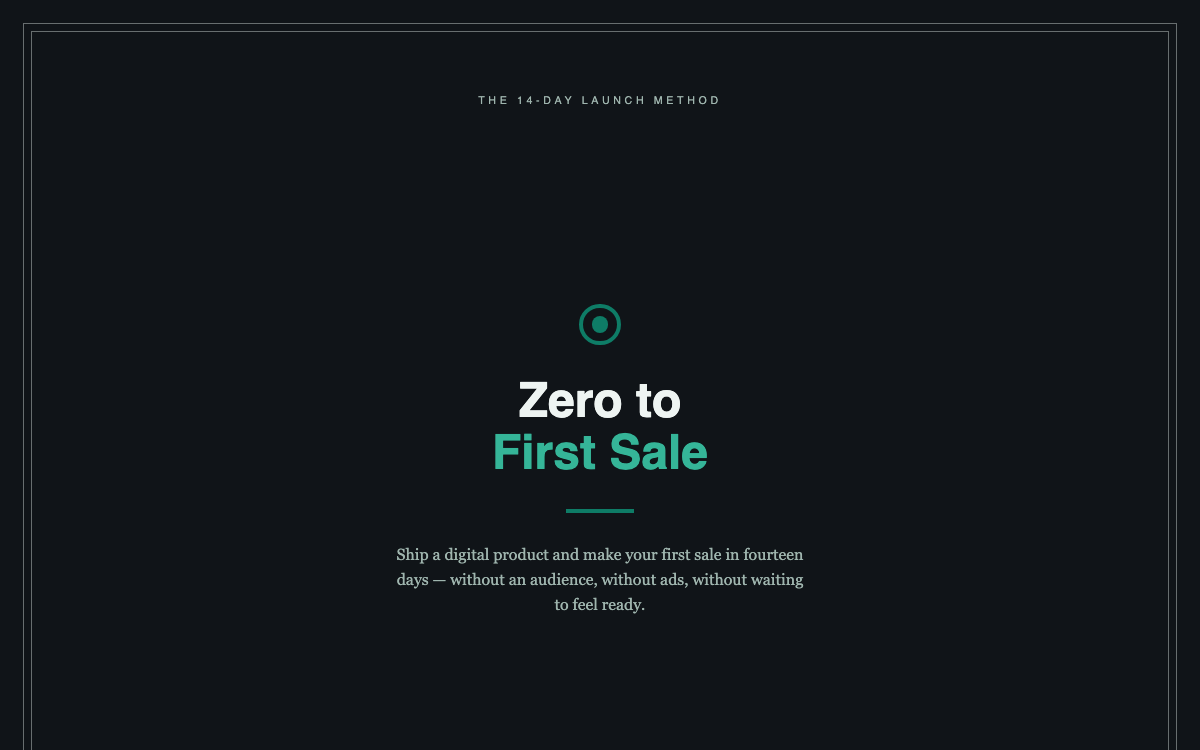 Ebook
EbookZero to First Sale
A 14-day launch method to get your first digital product sale.
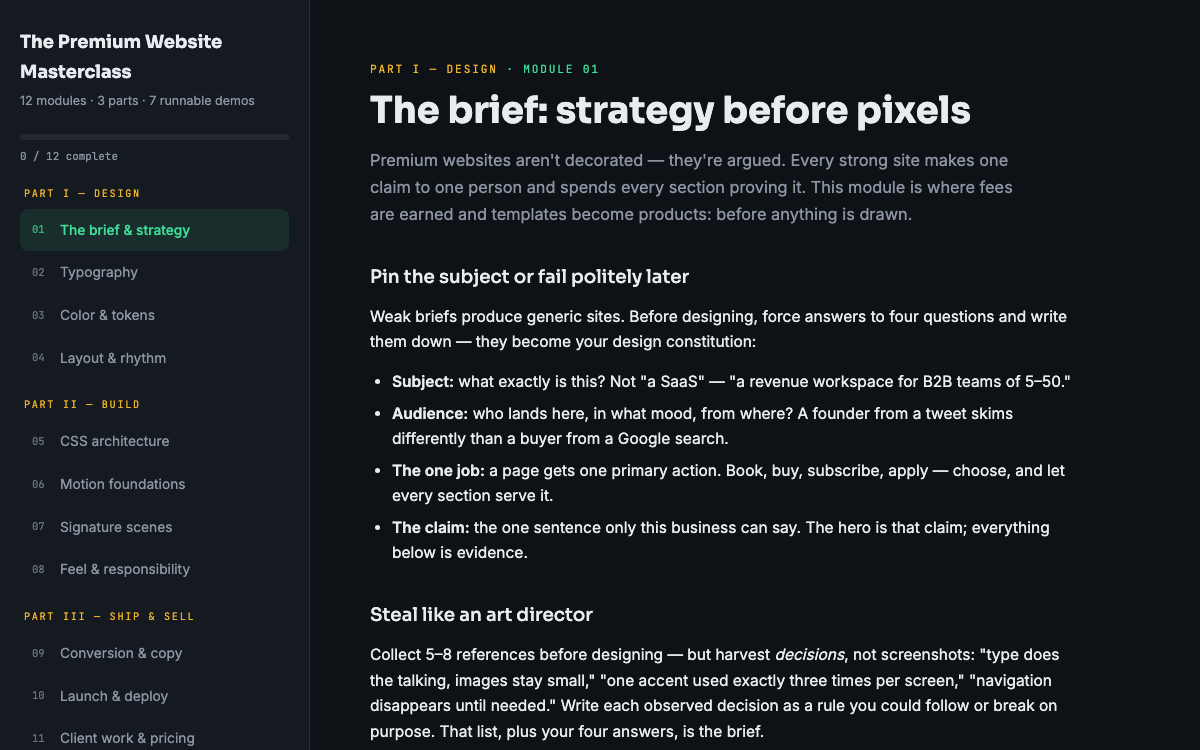 Guide
GuideThe Premium Website Masterclass
Design, build, animate, and sell premium websites - 12 modules, 3 parts, 7 runnable demos.
 SoftwareBeta
QuietScribe (Beta)
Private meeting notes for Mac - transcripts, summaries and action points, processed on your Mac.