
19 July 2026
The Three-Tier Proposal: Let Clients Upsell Themselves
By Abhishek V K · Founder, DigitalItUp
The short answer
A three-tier proposal offers the same project at three scopes: a stripped-down Basic, the Standard you actually recommend, and a Premium with high-margin extras. The anchoring works because clients compare tiers against each other instead of against 'no'. Price Standard at your real quote, Basic at roughly 60–70% with meaningfully less scope, and Premium at 1.5–2x. Most clients pick the middle; some upgrade themselves - revenue a single quote never produces.
Why does one quote put you at a disadvantage?
A single price gives the client exactly one decision: yes or no. All their negotiation energy lands on that number. Three prices change the question from 'should we hire this freelancer?' to 'which package fits us?' - hiring you becomes the assumption, not the debate. It also surfaces budget information you would never get otherwise: the client who picks Premium just told you what they are really willing to spend.
How to build the three tiers
- Standard: your genuine recommendation at your real price - build this first
- Basic: remove real scope (fewer pages, fewer concepts, no extras) at 60–70% of Standard
- Premium: add high-value, low-effort extras - extended support, faster delivery, an add-on deliverable - at 1.5–2x
- Name them by outcome ('Launch', 'Grow', 'Scale'), not 'Cheap/Mid/Expensive'
- Visually recommend the middle: 'Most clients choose Grow'
The Basic tier must be honestly smaller, not sabotaged - it exists for genuinely budget-limited clients and as an anchor. The Premium tier can include things that cost you little but are worth a lot to them, which is where margin lives.
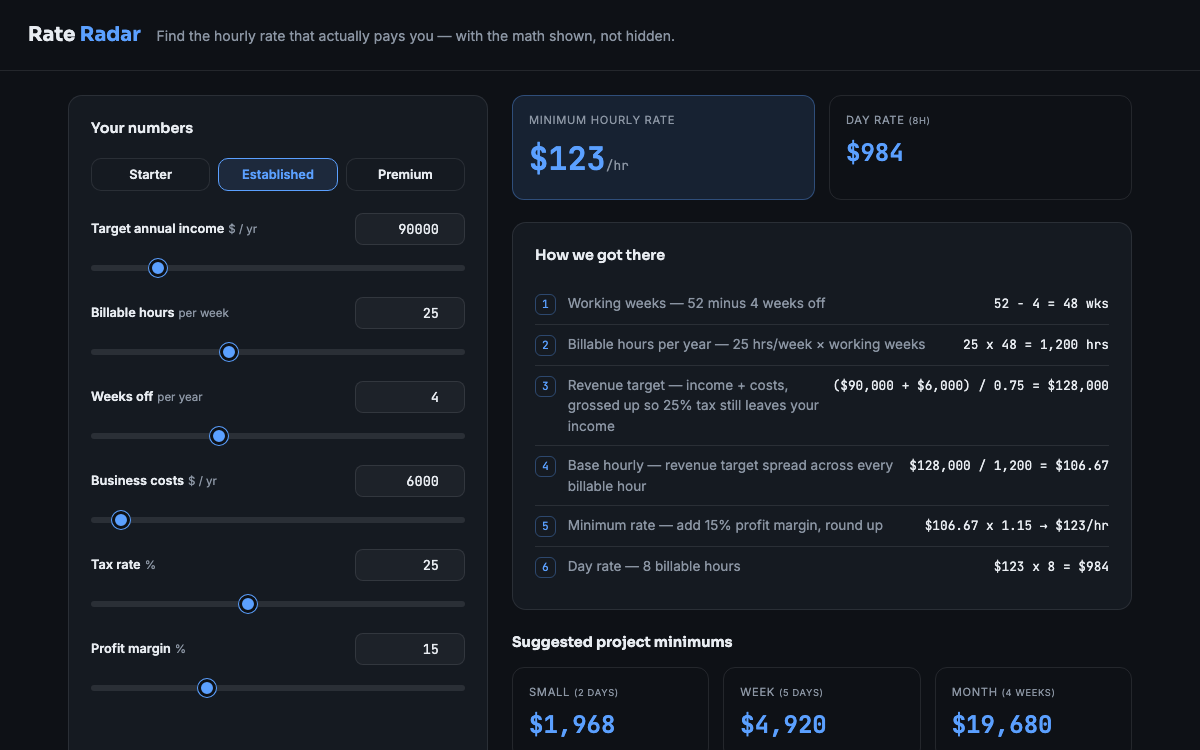
The common mistakes: making the tiers too similar (no reason to upgrade), offering seven tiers (decision paralysis), or pricing Standard at what you wish you could charge instead of a defensible number. Start from a rate you can justify - Rate Radar computes that base figure from your actual costs and hours - then build tiers around it. The Charge More pricing guide goes deeper on anchoring, tier design, and the psychology of why the middle option wins, with examples you can adapt to your own services.
Put this into practice
All products →The tools and templates behind this guide - instant download, yours forever.
 Software
Rate Radar
A freelance rate calculator that shows its work - defend your rate in any client call.
 Ebook
EbookCharge More - The Freelance Pricing Guide
For freelancers who are underpricing and know it.
 SoftwareBeta
QuietScribe (Beta)
Private meeting notes for Mac - transcripts, summaries and action points, processed on your Mac.